


Madama Butterfly 101 – Q&A with Director Mo Zhou
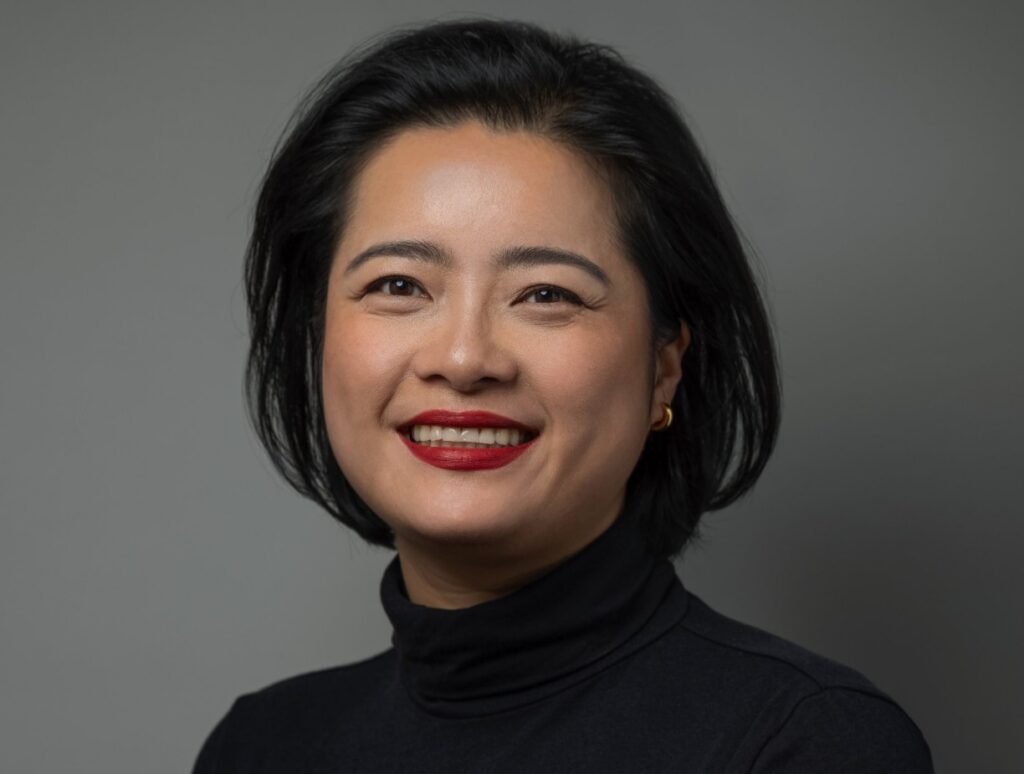
Women’s History Month is in full swing, and to honor the women in our industry, we’d like to introduce you to Mo Zhou, the Director of our upcoming production of Madama Butterfly. Zhou is making her Opera Colorado debut, but is no stranger to this opera. Get to know her perspective on Madama Butterfly and how her production approaches its history.
You’ve directed many different productions of Madama Butterfly. Tell us a little about your journey as a director working with this opera, and what continues to draw you back to it.
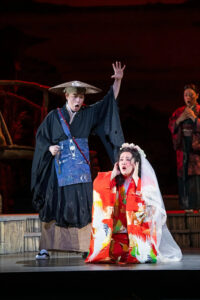
For over a decade, I was very reluctant to direct Madama Butterfly. As an Asian woman, I struggled with how the opera has reinforced harmful stereotypes—the hypersexualization, the exotic fetishization, the portrayal of Asian women as passive and meek. I turned down every opportunity because I couldn’t justify contributing to that legacy without purpose. But like any director, I kept working through the puzzle in my mind: how could I tell this story in a way that felt true to me? The turning point came when Virginia Opera approached me in 2023, and for the first time, I said yes—on the condition that I could fundamentally recontextualize the work. What I discovered was that by grounding the opera in the real historical moment of the postwar Allied Occupation of Japan (1946-1953), without changing a single word or note of Puccini’s score, everything deepens. Butterfly transforms from an “exotic symbol” into a woman who truly existed in this lived history.
Since then, I’ve directed this production with this concept at The Florentine Opera in Milwaukee, Vancouver Opera, Calgary Opera, and most recently at Arizona Opera. Each production has refined my understanding and deepened my commitment to this work. What draws me back is the shift we’re able to make—from being objects of the Eurocentric white male gaze to becoming active storytellers. From the start, I’ve built these productions with an all first-generation Asian women design team, fundamentally changing whose perspective shapes the narrative. When we remove the fantasy of exoticism, what remains is a clear, unflinching view of power: its violence, its seduction, and the devastating toll it exacts. This work matters because Butterfly was never a distant fable—it’s a mirror reflecting ongoing cycles of gendered and cultural exploitation. We see the same structure of desire and abandonment in the stories of Kopino children in the Philippines born to Korean fathers who never return, or Sino-African mixed-race children left behind by Chinese engineers in Africa. This pattern exceeds race; it’s a global reality that targets the vulnerable regardless of location. What continues to draw me back is reclamation. Each time I direct this opera, I’m not romanticizing tragedy—I’m reshaping the narrative, speaking its truth, remembering its cost, and helping audiences see with unfiltered clarity.
On the surface, Madama Butterfly looks like a tragic romance. What do you see beneath that, and what feels most important to communicate in this production?
I think it is important to remember that we do not see it merely as a love story—to me, it’s a survival story. Beneath the romance, Madama Butterfly reveals devastating power dynamics between East and West, the violence of colonialism, and a woman’s desperate search for safety and belonging in a world that has abandoned her. Puccini’s opera was born from a Eurocentric, white male gaze that romanticized and oversimplified Japan. It has historically erased the real power imbalances and treated Butterfly as a passive victim waiting for a man. What’s most important to communicate in this production is Butterfly’s agency, her backbone, her fight. She’s not just crying on the floor—she’s actively navigating impossible choices to protect herself and her son. The tension between American and Japanese identity, her family’s denouncement, her desire for a better life—all of these become clear and concrete rather than abstract. At its core, this is about a woman who believes in reinvention, who risks everything to build a new life. That yearning to be seen, to be chosen, to belong—that’s universal and timeless. Her faith becomes both her strength and her undoing, but she deserves to be portrayed with the full dignity and complexity she’s often denied.
This particular production will be set in the Rokumeikan era of Japan (1883-1887). How will this play a role in the opera and how the audience experiences it?
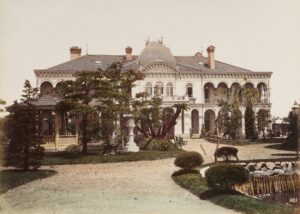
The Rokumeikan era was a fascinating and contradictory moment in Japanese history—a time of aggressive Westernization driven by diplomatic necessity. The Rokumeikan was a grand Western-style building in Tokyo where the Japanese government hosted elaborate balls and banquets for foreign diplomats, all in an attempt to prove Japan was “civilized” enough to be treated as an equal by Western powers. Japanese aristocrats wore European gowns and learned to waltz, served French menus, adopted Western etiquette—all to renegotiate the unequal treaties that had been forced upon Japan. It was cultural performance as political strategy. But it was also deeply controversial. Many Japanese conservatives saw it as abandoning their cultural identity, while Westerners remained largely unimpressed by what they viewed as mere imitation.
The “Rokumeikan diplomacy” ultimately failed, and the era ended in 1887 with the Foreign Minister’s resignation. Setting Butterfly in this period illuminates the cultural collision at the heart of the story. The Western costumes aren’t just aesthetic—they represent Japan’s complicated relationship with Western power and the pressure to assimilate. Butterfly’s adoption of American identity takes on deeper resonance when we understand this broader context of cultural negotiation and survival. The audience will see how individual choices reflect national struggles, and how women’s bodies and identities became sites of these larger political and cultural battles.
Principal characters in opera are often more complex than they first appear. How do you approach revealing that complexity, especially in characters audiences may think they already know?
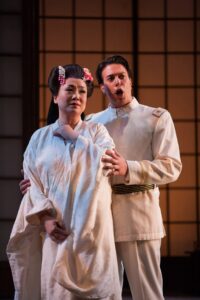
I start by asking: what if we believed in these characters as real people navigating real historical circumstances, rather than archetypes? With Butterfly, I work intensively with my performers to build her interior life from concrete circumstances rather than abstract emotion. She’s not generically “in love”—she’s making calculated survival decisions in a specific historical moment. This approach naturally reveals complexity because we’re looking at the story through multiple lenses that have traditionally been excluded from this opera’s creation. In my production, I aim to portray every female character as a real woman with her own backbone and feelings.
Even with characters like Pinkerton and Sharpless, I push my performers to find the specificity. Their actions are never black and white but rather emerge from the privilege that comes with their background and cultural standing. What are their actual motivations in this historical context? How do they rationalize their choices? Complexity emerges when we refuse to let anyone be simply a villain or victim but instead show how systems of power shape all of us differently. The audience may think they know these characters, but when we ground them in historical truth and human dignity, they discover people they’ve never really seen before.
What do you want audience members to take away from this opera? What can they look forward to?
First and foremost, audiences can look forward to Puccini’s magnificent, heartbreaking score performed beautifully. This is still Madama Butterfly with all its emotional power and stunning music intact. But I want audiences to leave thinking differently about what they’ve seen. This production asks them to sit with uncomfortable truths—about orientalism, about how we consume stories of “exotic” women, about the legacy of Western imperialism. I want them to see Butterfly not as a symbol or a fantasy, but as a woman whose story resonates with contemporary issues of immigration, cultural displacement, and the search for belonging. The Rokumeikan setting offers a window into a specific historical moment that many Western audiences may not know about—a time when Japan was desperately trying to prove itself worthy of equal treatment by the very powers that had forced unequal treaties upon it. Understanding this context makes the opera richer and more relevant.
Ultimately, I want audiences to leave with questions rather than easy answers. How do we honor classic works while acknowledging their problematic elements? How do we listen to voices that have been marginalized in these stories? What does it mean to truly see someone, rather than project our fantasies onto them? They can look forward to a production that treats this beloved opera with both deep respect for its artistry and honest reckoning with its history—one that aims to honor Butterfly with the dignity and complexity she deserves.
–
See Zhou’s vision come to life this May. Get tickets to Puccini’s Madama Butterfly now. >>
As an historian, I really appreciate your sharing this director’s reimagination of Madame Butterly in a different time period. Hopefully this will be shared with everyone in the playbill. Ms Jamison–you are doing a fantastic job of reinvigorating our Denver Opera in so many new ways. Bravo.